EVIDENCE DISAPPEARING: HOW CASCADE COUNTY IS OBSTRUCTING ACCESS TO PUBLIC COURT RECORDS
A Montana government office is systematically blocking a citizen from accessing public records—and doing it badly enough to create perfect documentation of obstruction of justice
By Michael Kelman-Portney
December 17, 2025
The Math Doesn't Add Up
On November 28, 2025, I received an invoice from Cascade County Clerk of Courts for a case called Kelman v. Henry. The description read: "Full case - microfiche MF 37 FR 7157." The case was ADV-89-1013, a civil lawsuit from 1989 that went to trial in 1991.
Cost: $4.25 for 17 pages.
There's just one problem: this was a three-week jury trial.
According to the surviving court order, the case went to trial December 2-19, 1991, before Judge Thomas McKittrick. The order references testimony from at least five witnesses, trial exhibits numbered through 50, and complex factual disputes requiring extended proceedings.
A three-week jury trial generates hundreds of pages of records: trial transcripts, witness testimony, depositions, exhibits, motions, briefs, jury instructions, and findings of fact.
I received 17 pages.
The invoice called it a "full case."
The Microfiche Numbers Tell The Truth
Here's where it gets interesting. The 17 pages I received have visible microfiche frame numbers—the reference codes used when documents are filmed for archival preservation. Those numbers indicate the records come from Reel 37, and the frame sequence spans a range suggesting approximately 800 pages exist on that reel.
They have the complete file.
They sent me 17 pages.
They kept 783 pages.
And they called it "full case" on an official invoice.
When the clerk, Tammy Waxman, sent these 17 pages, she wrote: "DV-89-1013 didn't have much on the microfiche. I don't know why. This is all that there was."
But the microfiche frame numbers visible on the pages she sent prove otherwise.
The Formal Request for Preservation
On December 13, 2025, I sent a detailed email to Ms. Waxman documenting these concerns. I explained that a three-week jury trial would generate hundreds of pages, noted the discrepancy between "17 pages" and "full case," and requested specific documentation:
The microfiche index showing what documents were filmed
Any filming logs for Reel 37
Records showing when portions might have been destroyed or transferred
Confirmation of who has accessed this file and when
I also made a formal preservation demand:
"I am formally requesting that all records related to ADV-89-1013 (or any other case request), including any index cards, filming logs, access records, and communications regarding such records be preserved immediately and not destroyed, altered, or transferred."
On December 15, I followed up: "Ms. Waxman?"
No response.
Blocked Phone and A/B Test
Here's what happened next, documented to the minute:
December 16, 2025 (1:00 PM Mountain Time): I called Cascade County Clerk's Office at the main number. The call was rejected before voicemail with a rapid beep-beep-beep signal—the distinctive sound of a blocked number.
I had called this number successfully many times before.
I'm a researcher. When something seems wrong, I test it.
At 12:35 PM Pacific (1:35 PM Mountain), I called the clerk's office from a Google Voice number with a Montana area code. The call went through perfectly. A clerk answered professionally, took a message for Ms. Waxman, and offered to help.
At 12:39 PM Pacific (1:39 PM Mountain)—four minutes later—I called back from my regular number.
Rejection signal. Beep-beep-beep.
I have audio recordings of both calls.
Same office. Same time. Different numbers. Different results.
My number had been systematically blocked from every extension at Cascade County Clerk's Office. Not one extension—all of them. This requires supervisor approval, IT involvement, and coordinated policy decision.
A government office blocked a citizen from contacting them about public records.
And the next day, my number was unblocked.
The Case Disappears
In mid December, I checked Montana's online court portal to verify case information. The case that had been publicly visible in October—the case I had requested and partially received in November.
The case was gone.
I called the clerk's office from a different number (since mine is blocked). After speaking with multiple clerks, I learned something remarkable:
The case is sealed, but there is no sealing order.
Montana law requires specific procedures to seal a court case:
A party must file a motion to seal
The court must hold a hearing
The judge must issue a written order
The order must state the legal basis for sealing
None of this happened. No motion. No hearing. No judge's order. No legal basis.
Someone simply marked the case "sealed" in the computer system.
A 34-year-old civil case, involving parties who are deceased, with no privacy concerns, no ongoing investigation, no legal justification—just marked "sealed" after I got 17 pages.
The Second Spoliation Demand
During my calls today, I spoke with a clerk named Jody and escalated to request a supervisor. I made a second formal spoliation demand, which I recorded:
"I demand that Reel 37 not be destroyed, not be tampered with. This is a spoliation request that this record be preserved no matter what, whether you guys are saying this case is sealed or not, whether you want to comply with the law or not."
I explained that the microfiche frame numbers prove approximately 800 pages exist, that the invoice claims "full case," and that I received only 17 pages. I requested immediate preservation of all records and asked that a supervisor contact me before end of business.
As of 2:00 PM Pacific Time, no supervisor has called.
The case remains marked "sealed" without order.
My has been unblocked from all extensions.
The status of Reel 37—and the 783 missing pages—is unknown.
What The Law Says
What Cascade County is doing violates multiple state and federal laws:
Montana Public Records Law (MCA §2-6-1002)
"Public records and open public meetings are essential to the maintenance of a democratic society. The people's right to know and to participate must not be abridged."
Court records are explicitly public unless a specific legal exemption applies. A 34-year-old civil case with deceased parties has no exemption. There is no privacy concern. There is no ongoing investigation. There is no legal basis to withhold records or seal the case.
42 U.S.C. §1983 - Civil Rights Violation
By systematically blocking a citizen's phone number from a government office and denying access to public records, Cascade County officials are acting "under color of state law" to deprive constitutional rights—specifically, the First Amendment right to access court records and petition government.
18 U.S.C. §1519 - Obstruction of Justice
"Whoever knowingly... conceals, covers up, falsifies, or makes a false entry in any record, document, or tangible object with the intent to impede, obstruct, or influence the investigation... shall be fined under this title or imprisoned not more than 20 years, or both."
If officials are concealing 783 pages of court records after receiving formal spoliation demands, while marking a case "sealed" without legal authority to justify the concealment, that meets the definition of federal obstruction of justice.
Spoliation of Evidence
Under both Montana and federal common law, once a party is on notice that records may be needed for litigation, they have a legal duty to preserve those records. I provided formal written notice on December 13, 2025, and formal verbal notice on December 17, 2025.
Any destruction or alteration of Reel 37 or related records after receiving these demands would constitute spoliation, subject to:
Sanctions
Adverse inference (court assumes destroyed evidence would have proven my claims)
Criminal penalties
Civil liability
Why This Matters Beyond One Case
This isn't about me getting 783 pages. This is about what happens when government officials think they can obstruct citizens with impunity.
Consider what Cascade County has done:
Provided incomplete records while calling them "complete" - Undermines public trust in record access
Blocked a citizen's phone number from government office - Creates barrier to accessing public services
Marked case "sealed" without legal authority - Fraudulent use of court system
Coordinated response within 48 hours of published research - Suggests monitoring and retaliation
Ignored formal preservation demands - Potential evidence destruction
This is how institutional corruption maintains itself: by controlling access to the evidence of corruption.
When a government office can:
Call 17 pages a "full case" from a three-week trial
Block citizens from contacting them
Mark cases sealed without court orders
Do it all within 48 hours of someone publishing research
Face no consequences
Then we don't have transparency. We have obstruction with a government seal.
The Incompetence Is Almost Impressive
What's remarkable is how badly they're doing this. If you're going to obstruct justice, you probably shouldn't:
1. Document your own lie
Don't put "full case" on the invoice if you're only sending a partial file
2. Leave the evidence visible
Don't include microfiche frame numbers that prove 800 pages exist when you're claiming only 17 exist
3. Create provable discrimination
Don't block ALL extensions so it's testable via A/B comparison with audio proof
4. Do fraudulent sealing
Don't mark something "sealed" without actually getting a sealing order
5. Retaliate
Don't seal the case because somebody came asking about it.
6. Ignore spoliation demands
Don't obstruct AFTER being formally warned, which turns civil spoliation into potential criminal obstruction
It's almost like they've never dealt with someone who documents everything.
The Evidence Is Mounting
I started researching Montana court records to understand my family's legal history. What I've found is something larger: a system that actively resists scrutiny.
But I have:
Official documents proving their lies (invoice says "full case")
Physical evidence they can't deny (microfiche frame numbers)
Audio proof of discrimination (A/B testing)
Timeline proving coordination (48 hours from blog to sealed case)
Formal preservation demands (they're on notice)
Professional documentation of every step
They can block my phone number.
They can mark cases sealed.
They can hide 783 pages.
But they can't hide the microfiche frame numbers that prove those pages exist.
And they can't hide the fact that they're panicking.
Because innocent people don't:
Lie about "full case" when providing partial records
Block citizens from contacting government offices
Mark cases sealed without legal authority
Do it all within 48 hours of someone publishing research
Ignore formal demands to preserve evidence
Innocent people provide the records and move on.
Guilty people obstruct.
And sloppy guilty people create perfect documentation of their obstruction while they're doing it.
Michael Kelman-Portney is a researcher investigating institutional patterns in Montana's legal system. He can be reached at portneymk@gmail.com
All evidence referenced in this article—audio recordings, documents, timelines, and correspondence—is preserved and available to law enforcement, journalists, attorneys, and federal oversight agencies upon request.
Case reference: ADV-89-1013 / DV-7-1989-0001013-UNK, Cascade County District Court, Montana
Reel 37. Frame 7157. Approximately 800 pages. 17 provided. 783 concealed.
Spoliation demands made December 13 and December 17, 2025.
Preserve the evidence.
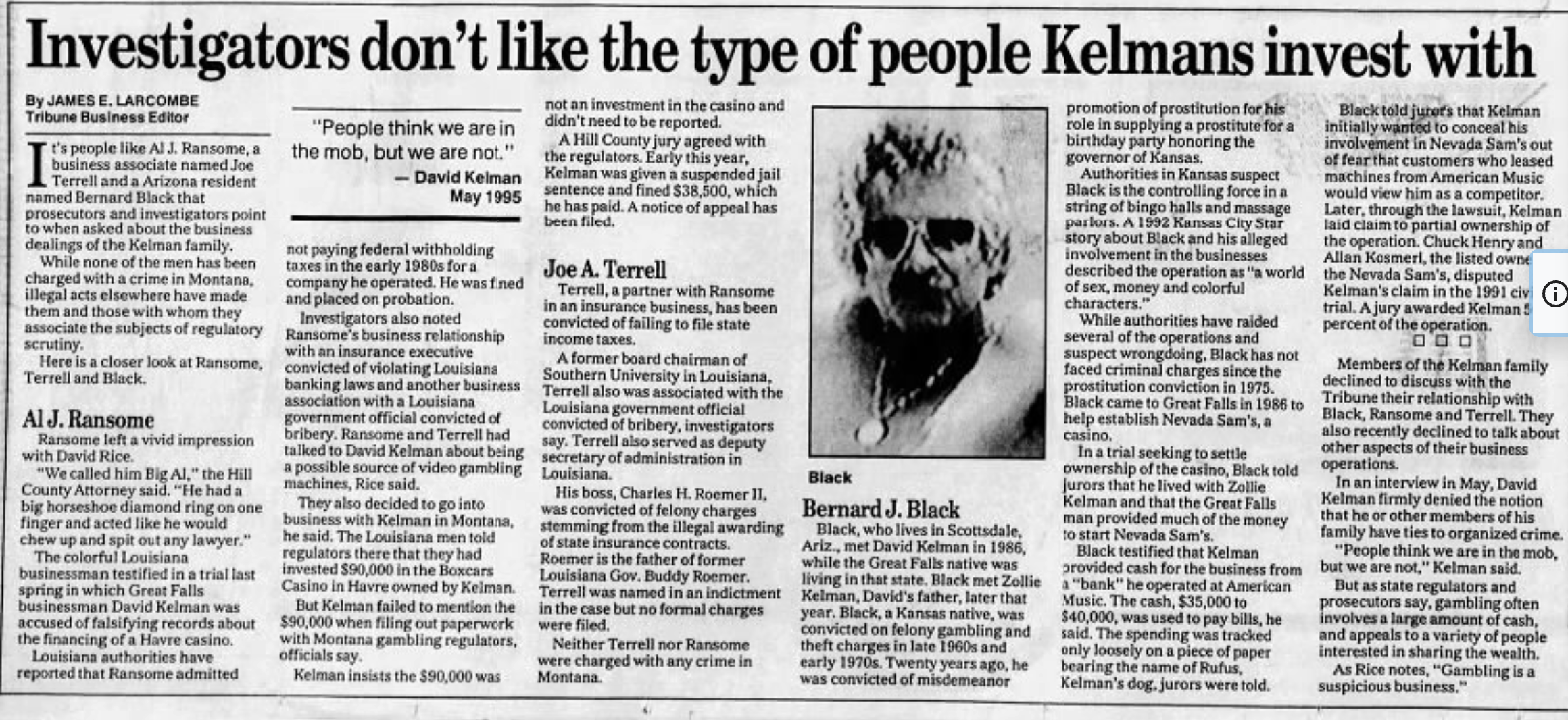
Kelman v. Henry, which the Cascade County Clerk of Courts says has recently been sealed, was covered in the Great Falls Tribune contemporaneously.